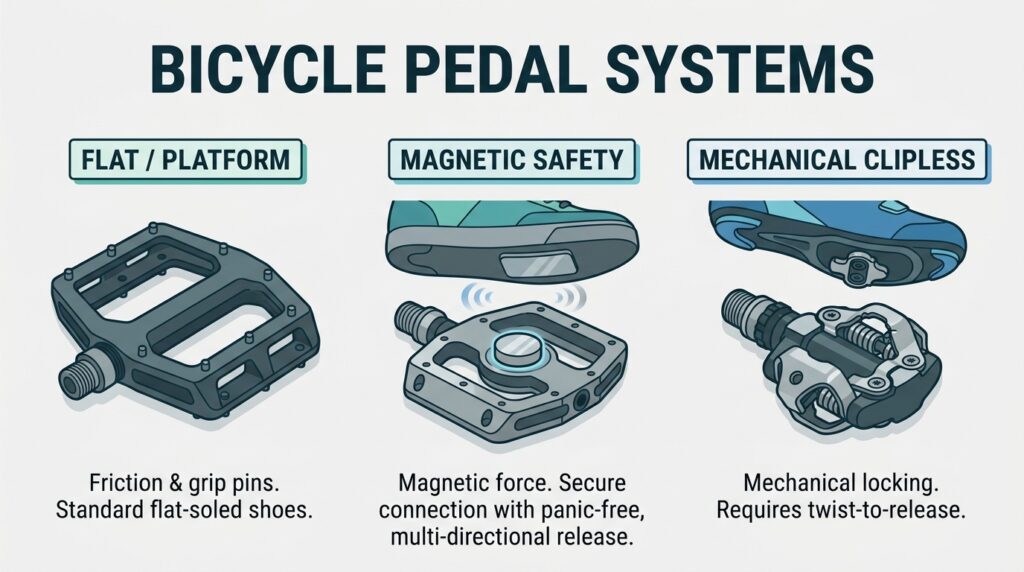
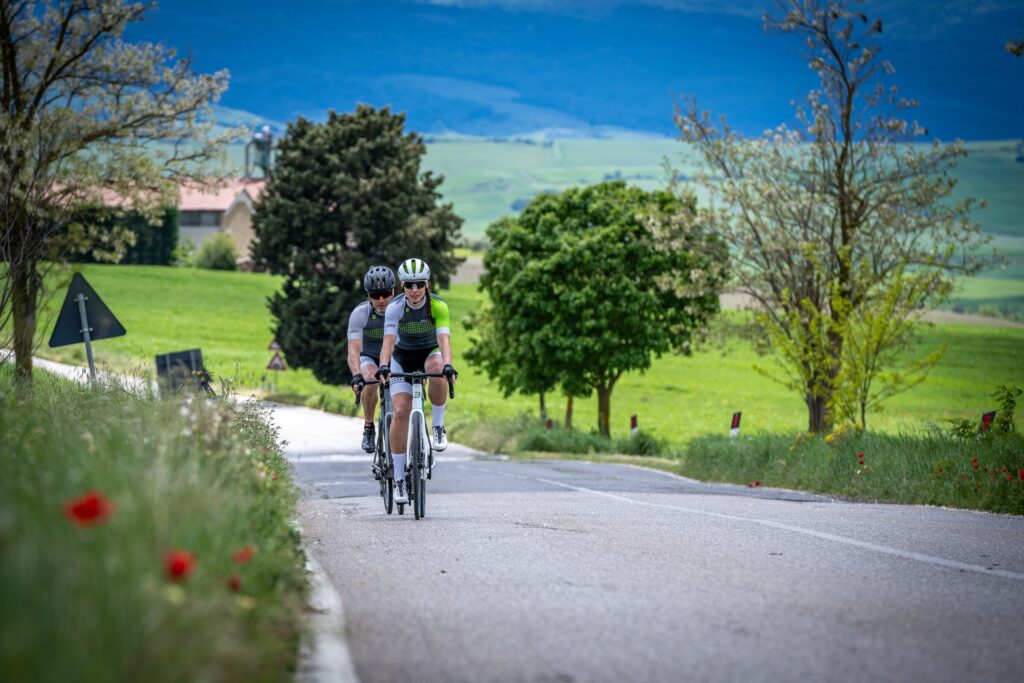
Our short answer: if you are new to road cycling and nervous about clipping in, start with magnetic pedals such as the Magped ROAD2. They hold your foot firmly enough for efficient pedaling, but let go in any direction the moment you need to put a foot down – no ankle twist required. Below we explain why that matters and how magnetic pedals compare with Look Keo or Shimano SPD-SL style systems.
Why clipless pedals are hard for beginners
Being attached to your pedals makes riding more efficient, but traditional road pedals come with two typical problems for newcomers:
- Falling over at a standstill. Classic 3-bolt road pedals hold the cleat with a spring. You only get out by turning your heel outwards. In a sudden stop – a red light, a car pulling out – most people instinctively pull the foot straight up instead. That does nothing, and the rider tips over sideways.
- Stress on the knees. Road cleats only allow a few degrees of rotation (usually 0–6°). If the cleat isn’t set up quite right, your knee is forced into an unnatural line on every pedal stroke, which can lead to pain over time.
How long does it take to get used to them?
With mechanical clipless pedals, most riders need several weeks. You have to learn to flip the pedal with your toe, hook in the front of the cleat and push down until it clicks – and, more importantly, train yourself to twist the heel out early before every stop. Almost everyone has at least one slow-motion fall at a junction along the way.
Magnetic pedals need almost no practice. You put your foot on the pedal and the magnet pulls the steel plate under your shoe into place. To get off, you simply lift the foot firmly, tilt it or twist it – whatever your reflex does works. That means you get the benefits of being connected to the pedal from the first ride.
Comparison: flat, clipless and magnetic road pedals
| Flat pedals | Clipless (Look / SPD-SL) | Magnetic (Magped ROAD2) | |
|---|---|---|---|
| How the foot is held | Friction only | Spring-loaded clamp | Magnet and steel plate |
| How you get out | Just lift | Twist heel outwards | Lift, tilt or twist |
| Risk of falling at a stop | None | High while learning | Very low |
| Freedom for the knee | Full, but no support | Limited | Free rotation and side movement |
| Walking in the shoes | Easy | Awkward (plastic cleat) | Flat plate with cover |
| Pedaling efficiency | Push only | Push and pull | Push and pull (up to 200 N hold) |
What magnetic pedals do better for new riders
1. Getting out in any direction
With a mechanical system there is exactly one way out: turn the heel past a set angle. The Magped ROAD2 holds the shoe with magnetic force only, so pulling up, rolling the foot or twisting all release it. If something unexpected happens, your natural reaction is the right one.
2. Easier on the knees
Everyone’s legs track a little differently through the pedal stroke. A magnetic plate isn’t locked into a fixed position, so your foot can make the small rotations and sideways movements it wants to – reducing strain on knees and hips.
3. Clipping in without looking
No need to search for the pedal or flip it with your toe while pulling away from a light. Put your foot roughly on the pedal and the magnet centres it. Your eyes stay on the road.
4. They look like normal road pedals
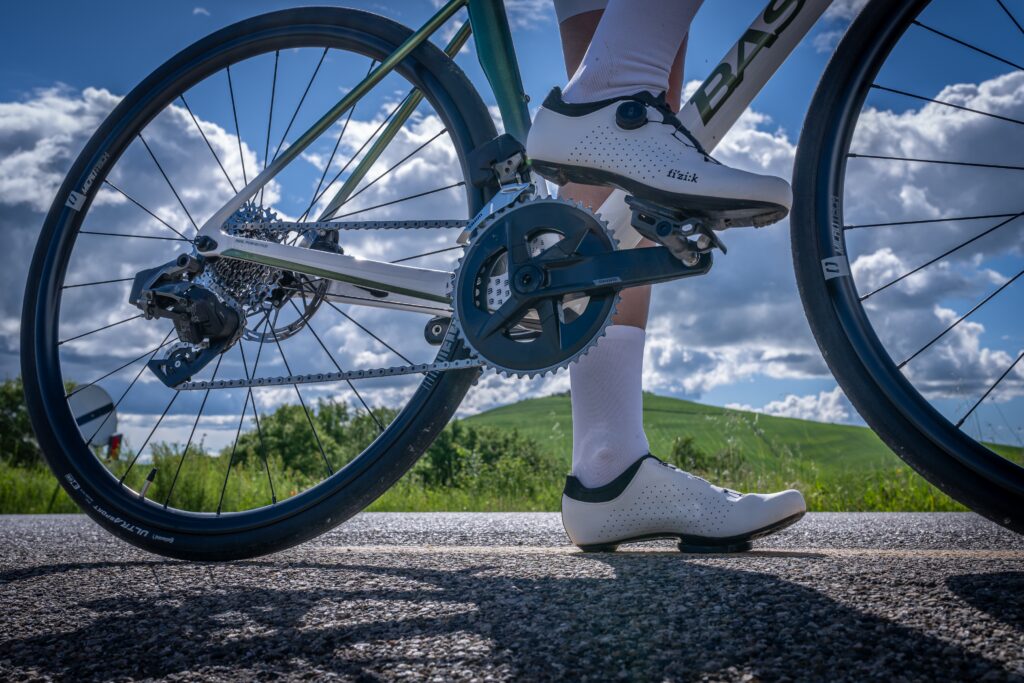
Many beginners ride cheap flat pedals on an expensive road bike because they’re afraid of clipless. The Magped ROAD2 is slim and low and looks like a regular high-end road pedal, so it fits the bike and won’t stand out on a group ride.
Which magnetic pedal should you choose?
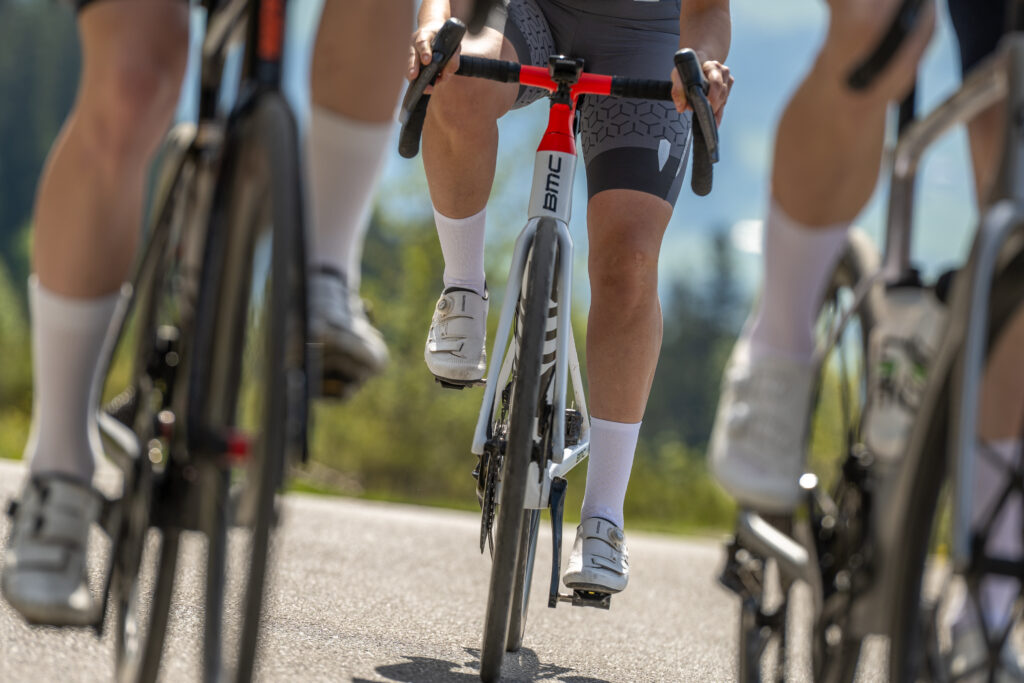
- Road riding, group rides and sportives: the Magped ROAD2. It uses a carbon body and fits any shoe with the standard 3-bolt road pattern. Two versions are available:
- Steel axle: around 270 g per pair, robust and made for everyday road riding.
- Titanium axle: around 214 g per pair – one of the lightest road pedal systems you can buy.
- Commuting and mixed surfaces: if you’d rather wear normal-looking shoes with a rubber sole and 2-bolt SPD mount, look at the Magped SPORT2 or the very light magnesium Magped ULTRA2. You can ride on both sides and walk comfortably off the bike.
Want a wider overview? Magped explains the differences in its guide to flat, clipless and magnetic pedals.
Frequently asked questions
Is the magnet strong enough for climbing and sprinting?
Yes. With magnets rated up to 200 N, each pedal holds about 20 kg upwards. That is plenty to pull up on a steep climb, while a deliberate sideways or emergency movement still releases the foot.
Do I need special shoes?
No. The Magped ROAD2 works with any road shoe that has the standard 3-bolt mount. The steel plate is bolted on where a normal cleat would go.
Our verdict
For beginners, magnetic pedals take away the biggest worry about clipless – falling over at a stop – without giving up efficient pedaling. Read our full Magped ROAD2 review for test scores, specs, pros and cons.